Our posts were interrupted lately by a mountain of work and three large, nasty dogs but we're back again.
To make things better, we've revved up a nice long video of action from the Silverstone VSCC meet 12 years ago. This is almost four minutes of action from one race, with most of the dull bits stripped out. It's only shot from one corner but hey - we're hobbyists, waddya want?
Though we've stripped out most of the 'boring' stuff, we've left in some rather empty visuals so you can still enjoy the sounds. Please let us know what you think - we have hours and hours more raw footage to edit and it helps to know someone else enjoys this stuff (or not...).
Showing posts with label history. Show all posts
Showing posts with label history. Show all posts
Monday, April 30, 2012


Saturday, April 07, 2012
Onboard with Morgans at the Montlhéry 2011 Vintage Revival
"I know its a cliche but 'only in France' could you be chasing a tartan Morgan."
Generally speaking, we're not fans of music in motoring videos. If anything, we find it a huge turnoff.
True gearheads want to hear exhaust notes, intake roar, gearbox whine, valvetrain chatter, screaming tires, not some sap's half-cocked idea of music that suitably conveys the majesty of the moment.
Harrumph!
Call us wrinkled old curmudgeons if you must but when we were little boys, we didn't need the music to swell or the narrator to scream at us in order to understand when something was impressive.
If anything, we resent the implied argument that were we denied suitable direction, we would also be denied any real understanding and appreciation of just how special is a thing or a moment.
The universe is massive. Dinosaurs were huge, incredible beasts. Mountaineering is dangerous. Formula 1 is loud, fast and exciting. We get it, thank you very much. No need for your music or your 'expert' exhortations.
However!
In this case, we think the music isn't just acceptable, it feels like a proper party guest. And, as pointed out in the video's comments section, the level of wind noise on these kinds of recordings inevitably requires some music to drown it out. You cannot, after all, truly install a microphone 'inside' a Morgan three-wheeler.
So, fire up this video (in half-HD if you can) for a fun if rather bumpy ride around l'Autodrome de Linas-Montlhéry, one of the great circuits in motorsports history.
History
After Indianapolis, Brooklands and Monza, Montlhéry is one of world's earliest large banked oval circuits. Perhaps only Spain's forlorn Sitges Terramar circuit, which today lies in a truly fowl state of ruination, suffers a greater disparity between its former glory and its modern abandonment.
If you still don't appreciate the value of Montlhéry, let us know - we'll send over some music and screaming narration.
Have some more
But wait - that's not all!. We've gone off to find some related videos.
Here's Jay Leno reviewing Morgan's new 3 Wheeler:
Porsche 910 tackles the Montlhery circuit:
The 1935 Grand Prix de France:
Saturday, March 17, 2012
1929 Gar Wood Miss America VIII Has Two Seats, 16 Cylinders, 2,000 Horsepower and Unlimited Awesomeness

You're looking at the motivation behind one of power-boat racing's most notable classics - a pair of V-16 competition engines built by one of the greats of American power sports, Harry Miller. Each of these engines displaces 1,113 cubic inches and produces more than 900 horsepower. With their original superchargers fitted, they're reputedly good for 1,800 horsepower each. All that power isn't much use without something to push around and here's where the beast variable is injected into the incredible beauty formula of this marine-monster equation.
The Beauty of a Simpler Era

Gar Wood built Miss America VIII in 1929 and what a boat it is: thirty feet of Philippine mahogany, three-quarters of it the original timber used by Gar Wood and designer Napoleon Lisee. Lisee is quoted as having considered this boat, the Eighth, the best he ever built.

Enduring Success

In 1929, some 400,000 spectators along the shores of the Detroit River and the island of Belle Isle, watched Gar Wood himself pilot VIII to the boat's first Harmsworth Trophy win, narrowly beating Gar Wood's own Miss America VII, with his brother at the helm.
The following year, VIII was beaten by yet another of Gar Wood's boats - Miss America IX. 1931 was again to be VIII's lucky year, however.
This time it was Gar's brother George, who sat behind the wheel of VIII as it crossed the finish line behind Gar Wood in Miss America IX and Kaye Don in Miss England II.
After the first two finishers were disqualified for having beaten the starter's pistol, Miss America the Eighth was declared to have won her second Harmsworth Trophy.
Those Miller Engines
Miss America VIII enjoyed all of that success from 1929 to 1931 before Mr Miller's incredible engines even entered the picture. Gar Wood had met Harry Miller at the Indianapolis 500 automobile race in May of 1931 and ordered up some of Miller's impressive motors for the Harmsworth race. An accident, however, had prevented them from being fitted in time for the 1931 trophy race in Detroit.
The Miller V-16s did arrive, however, and Wood had them fitted in order to aim for even higher speeds. VIII had been running with Packard V-12 engines. Though powerful, they simply weren't in the same league as Miller's revolutionary new V-16s.

Running with their superchargers, the two Miller V-16 engines gave Miss America VIII some 3,600 horsepower. Late in 1931, the boat was timed at 104mph on the Harlem River, proving the worth of this incredible pairing of beautiful hull and stunning alloy V-16 engines.
Miss America VIII Videos
Related Videos
More
Miss America VIII is up for sale. For more great photos and plenty of information about the boat and/or the chance to become Miss America VIII's new owner, head over to Mecum Auctions.
All Miss America VIII photos in this post and the first video, courtesy of the fine folks at Mecum Auctions.
Monday, March 12, 2012
A pair of superb on-board motorsports videos
Here are a couple of my favorite on-board videos, one of Frank Gardner lapping the UK's Oulton Park circuit in 1973. The other is with Jacques Laffite piloting the Ligier Matra JS9 F1 car around Italy's fearsome Monza track in 1978.
Monday, September 10, 2007
The 50 Worst Cars of All Time
Time.com has the list of what it reckons is the 50 worst cars of all time. Do you agree? There should be something in here to piss off everybody.
1899 Horsey Horseless
1909 Ford Model T
1911 Overland OctoAuto
1913 Scripps-Booth Bi-Autogo
1920 Briggs and Stratton Flyer
1933 Fuller Dymaxion
1934 Chrysler/Desoto Airflow
1949 Crosley Hotshot
1956 Renault Dauphine
1957 King Midget Model III
1957 Waterman Aerobile
1958 Ford Edsel
1958 Lotus Elite
1958 MGA Twin Cam
1958 Zunndapp Janus
1961 Amphicar
1961 Corvair
1966 Peel Trident
1970 AMC Gremlin
1970 Triumph Stag
1971 Chrysler Imperial LeBaron Two-Door Hardtop
1971 Ford Pinto
1974 Jaguar XK-E V12 Series III
1975-1989
1975 Bricklin SV1
1975 Morgan Plus 8 Propane
1975 Triumph TR7
1975 Trabant
1976 Aston Martin Lagonda
1976 Chevy Chevette
1978 AMC Pacer
1980 Corvette 305 "California"
1980 Ferrari Mondial 8
1981 Cadillac Fleetwood V-8-6-4
1981 De Lorean DMC-12
1982 Cadillac Cimarron
1982 Camaro Iron Duke
1984 Maserati Biturbo
1985 Mosler Consulier GTP
1985 Yugo GV
1986 Lamborghini LM002
1995 Ford Explorer
1997 GM EV1
1997 Plymouth Prowler
1998 Fiat Multipla
2000 Ford Excursion
2001 Jaguar X-Type
2001 Pontiac Aztek
2002 BMW 7-series
2003 Hummer H2
2004 Chevy SSR
1899 Horsey Horseless
1909 Ford Model T
1911 Overland OctoAuto
1913 Scripps-Booth Bi-Autogo
1920 Briggs and Stratton Flyer
1933 Fuller Dymaxion
1934 Chrysler/Desoto Airflow
1949 Crosley Hotshot
1956 Renault Dauphine
1957 King Midget Model III
1957 Waterman Aerobile
1958 Ford Edsel
1958 Lotus Elite
1958 MGA Twin Cam
1958 Zunndapp Janus
1961 Amphicar
1961 Corvair
1966 Peel Trident
1970 AMC Gremlin
1970 Triumph Stag
1971 Chrysler Imperial LeBaron Two-Door Hardtop
1971 Ford Pinto
1974 Jaguar XK-E V12 Series III
1975-1989
1975 Bricklin SV1
1975 Morgan Plus 8 Propane
1975 Triumph TR7
1975 Trabant
1976 Aston Martin Lagonda
1976 Chevy Chevette
1978 AMC Pacer
1980 Corvette 305 "California"
1980 Ferrari Mondial 8
1981 Cadillac Fleetwood V-8-6-4
1981 De Lorean DMC-12
1982 Cadillac Cimarron
1982 Camaro Iron Duke
1984 Maserati Biturbo
1985 Mosler Consulier GTP
1985 Yugo GV
1986 Lamborghini LM002
1995 Ford Explorer
1997 GM EV1
1997 Plymouth Prowler
1998 Fiat Multipla
2000 Ford Excursion
2001 Jaguar X-Type
2001 Pontiac Aztek
2002 BMW 7-series
2003 Hummer H2
2004 Chevy SSR
Tuesday, August 28, 2007
The Ekranoplan - AKA Caspian Sea Monster AKA кранопла́н AKA KM
The CIA dubbed them the "Caspian Sea Monsters" (one might think because US government spy satellites and overflights spotted these gargantuan beasts skimming across the Caspian Sea but more likely the name came from intelligence "agents" who witnessed the things in what amounts to full flight). The Soviets called them KM. Known as ekranoplan (Russian экранопла́н "screen plane"), these ground effect craft (GEV- ground effect vehicle) were designed to exploit two advantages of low-level flight - the low-propulsion requirements of ground effect flight (WIG - Wing in Ground effect), and the ability to fly below radar coverage.
The Soviets designed, developed and built a range of these huge GEV. They built troop carriers, military transports and they even built versions that operated as (extremely) mobile missile launch platforms. The largest, the KM, weighed some 540 tonnes fully-loaded and could carry over 100 tonnes of cargo (that's as much as a Boeing 757!.
These were some big, bad, battle-cruisers. The only thing they lacked were those cool, robotically-controlled laser guns you see in the movies. Oh, and the ability to jump to warp speed. But no doubt the Soviets had that well in hand too. Damn you, Reagan. DAMN YOU!
Not to worry, the Chinese are on the case.
Not had enough? There is some cool Google Earth-related stuff here.
The Soviets designed, developed and built a range of these huge GEV. They built troop carriers, military transports and they even built versions that operated as (extremely) mobile missile launch platforms. The largest, the KM, weighed some 540 tonnes fully-loaded and could carry over 100 tonnes of cargo (that's as much as a Boeing 757!.
These were some big, bad, battle-cruisers. The only thing they lacked were those cool, robotically-controlled laser guns you see in the movies. Oh, and the ability to jump to warp speed. But no doubt the Soviets had that well in hand too. Damn you, Reagan. DAMN YOU!
Not to worry, the Chinese are on the case.
Not had enough? There is some cool Google Earth-related stuff here.
Friday, January 06, 2006
Friday Bonus Photo: 1977 Alfa Romeo Alfetta GTV 2.8i V8

How about a nice little Friday afternoon bonus, eh? Here's something you don't see everyday. Actually, you'd be lucky to see one anywhere. Ever.
Alfa Romeo's racing department, Autodelta, had been campaigning an Alfetta (pic of the shell)with a 340bhp, 3.0 litre version of the Montreal's V8.
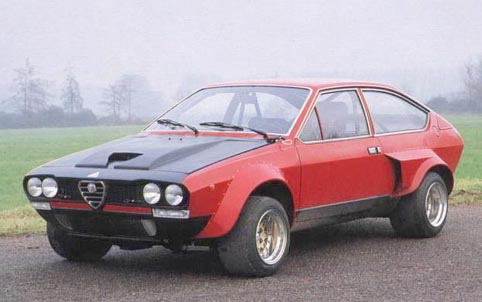
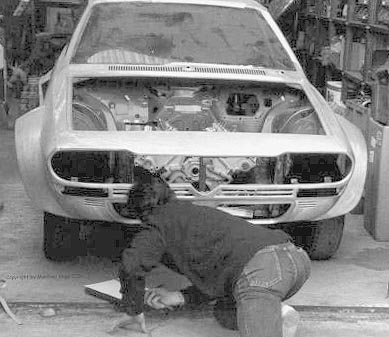
Later, the German distributor got Autodelta to fit the standard Montreal engine to a standard Alfetta bodyshell. Twenty were built and, as these were Alfetta bodyshells after all, they would have begun to corrode before they even left the factory. Hence, the rarity.
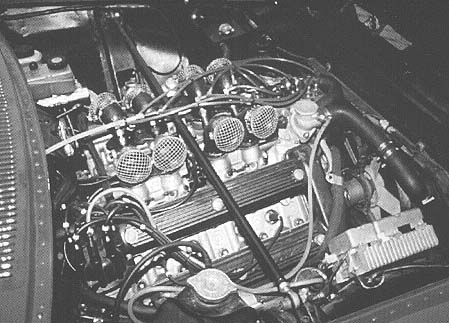
Unfortunately, the 1970s were not a good era for quality steel, quality construction, quality shipping or quality storage for carmakers, least of all Italian ones.
More info here.
If you are all super lucky, I might find time over the weekend to share my secret stash of XXX-rated car porn. That's right, I'm threatening to whip out my photos of a Porsche Carrera GT1 hiding in its super-secret London batcave....
1928 Baldwin Pacific 4-6-2 Steam Loco in Thailand

I warned you that this blog would get involved in some pretty nasty geargeekness. Here's an old (how many young ones are there?) steam rail locomotive I photographed in Hat Yai, in southern Thailand a few years ago. Actually, it was almost exactly two years ago today, come to think of it.
Anyway, for the oh, probably five billion or so of you not familiar with such things, this is apparently a 1928 4-6-2 - known as the "Pacific" class - of locomotive, manufactured by the American company Baldwin.
While researching this beast, I've unearthed quite a mass of "enthusiasts" of old steam locos and rail history in SE Asia. Well, we like to call ourselves enthusiasts. Lord only knows what the great washed masses like to call us saddos.
Of course, upon reflection, it's no surprise whatsoever there is such a mass of interest in old trains in Thailand. Even the new trains ain't. And the old ones definitely are.
Well, if you can't summon the money or pressure to get Kyosan Kogyo to "knock one out for old times' sake", you can always build one of these scale Baldwin Pacific 4-6-2s.
Amazon.com has
 a bunch of books and other railroad-related items, much of it from Aristo-Craft/Aristocraft.
Friday, December 30, 2005
RIP Keith Duckworth (1933-2005)
Keith Duckworth OBE, who founded Cosworth Engineering with Mike Costin, and a man of gigantic importance to motoring and motor sports, died on Decemember 18, 2005.
Cosworth were responsible for some highly significant developments in motoring history.
This includes ome of the most important engines in motorsport, especially the family that included the legendary the DFV that formed the backbone of "DIY" Formula One racing for some 15 years. The DFV won its first race in 1968 and was still winning races in 1983! In fact, an evolution of the DFV, the DFR, won the 1989 Japanese GP and was still used in GP racing into 1992!
Cosworth had a long association with the Ford Motor Company that led to the development of:
Cosworth was also involved in the development of engines for General Motor's
Cosworth was also responsible for the engine in the Mercedes-Benz 190 E 2.3-16. Note that this means Cosworth was responsible for the two distinctly different engines in two cars that competed with each other both on the road and the track, the Ford Sierra Cosworth and the Mercedes-Benz 190 E 2.3-16. Both are legendary vehicles of that period, noted for their then monstrous ability on the road and their constant on-track skirmishes for podium positions.
The memorial web site is here.
Cosworth were responsible for some highly significant developments in motoring history.
This includes ome of the most important engines in motorsport, especially the family that included the legendary the DFV that formed the backbone of "DIY" Formula One racing for some 15 years. The DFV won its first race in 1968 and was still winning races in 1983! In fact, an evolution of the DFV, the DFR, won the 1989 Japanese GP and was still used in GP racing into 1992!
Cosworth had a long association with the Ford Motor Company that led to the development of:
Cosworth was also involved in the development of engines for General Motor's
- Chevrolet Vega
- Opel Ascona 400
- Opel Manta 400
- Opel Kadett
- Opel/Vauxhall Astra GSi
- Opel/Vauxhall Vectra
- Opel/Vauxhall Calibra turbo
- 2.5 L V6 used in the Vectra, Calibra and the Saab 900
Cosworth was also responsible for the engine in the Mercedes-Benz 190 E 2.3-16. Note that this means Cosworth was responsible for the two distinctly different engines in two cars that competed with each other both on the road and the track, the Ford Sierra Cosworth and the Mercedes-Benz 190 E 2.3-16. Both are legendary vehicles of that period, noted for their then monstrous ability on the road and their constant on-track skirmishes for podium positions.
The memorial web site is here.
Subscribe to:
Posts (Atom)